
The Q3 Couple
Choose it. Design it. Or it will design you.

SUNDAY ELDERBERRIES · MAPPING THE NEW Q3 · WEEK 10
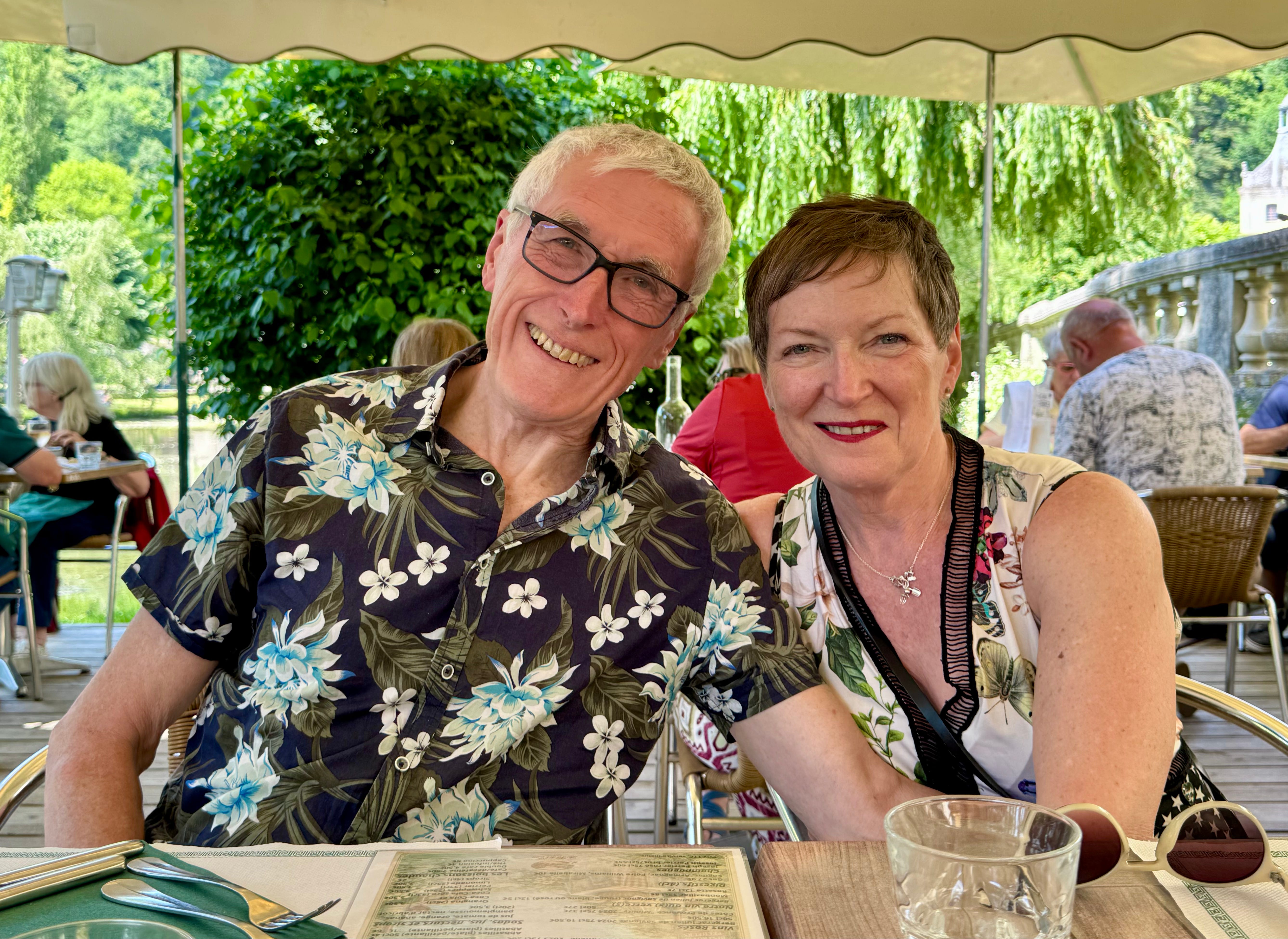
I collect Q3 role models the way some people collect vintage wine or good walking shoes. Deliberately. With intention. Because we are navigating largely without maps, and the people who are doing it well are the best navigational tool available. I’ve always hungered for footsteps I can walk in.
What I find harder to find — and look for more urgently — are role models of Q3 couples. Not couples in the brochure sense. Not the retirement-golf-and-grandchildren version. Couples who are growing. Couples who have chosen each other again, consciously, in the second half. Couples who are along for the becoming — or brave enough to redesign what being together means, now.

Renegotiating Relationships
This week, I had a long conversation with a group I’ve been meeting since Covid began — six women I call my 6 Old Broads. Longevity experts all, ranging from their mid-60s to mid-70s, spread across three countries. The conversation was unusually honest that evening. Half had been married for a long time and still were. Half were in second relationships. One has been post-divorce-single for a long time.
The long-married ones spoke with a kind of rueful recognition. They had accepted certain patterns over the decades — certain silences, certain distributions of labour and listening. And now? They felt they couldn’t really renegotiate. Too much had calcified. The terms of the arrangement were, in some unspoken way, fixed. And not in a nourishing way.
The ones in second relationships described something different. They had entered those partnerships late, already knowing themselves. Past 50. Clear — or at least clearer — about what they needed, what they couldn’t tolerate, and what they wanted their daily life to feel like. They had asked for things, kindly and specifically, from the beginning. They had no hesitation asking again. The relationship had been built on the known self, not the younger, more accommodating, less-sure version.
I’m not making an argument for divorce. I am pushing for greater skill in conscious coupling (see my TEDx talk on Conscious Coupling In the Age of Longevity if this resonates).

The danger in any long relationship isn’t conflict. It’s stagnation. The slow drift into inherited patterns that no longer fit the people you’ve become. One person accelerating into Q3 — curious, shedding, remaking — while the other stays put. Or both of you staying put, out of habit, when neither actually wants to.
Conscious Coupling
Later this week, I flew down to Bordeaux. A few days with old friends — an Australian couple, roughly the same age as the man and me. During Covid, something shifted for them. They arrived at the conclusion, like so many, that life is no dress rehearsal. The old dreams they had long talked of had to happen. So they bought half an old stone barn in the middle of rolling green hills in rural Charentes. They live in Sydney. They now come here for several months each spring and summer. They rent it out enough to cover their costs. They are not, as they put it cheerfully, rolling in it.
But they are is intentional.
They lived in France for a few years 30 years ago (I met them in Paris decades ago) and always promised themselves they would return. They’ve kept the promise. He had a serious health scare along the way. Rather than becoming a reason to contract, it became an additional reason to expand — to anchor into the present, to enjoy now rather than deferring to a later that might not arrive as expected.
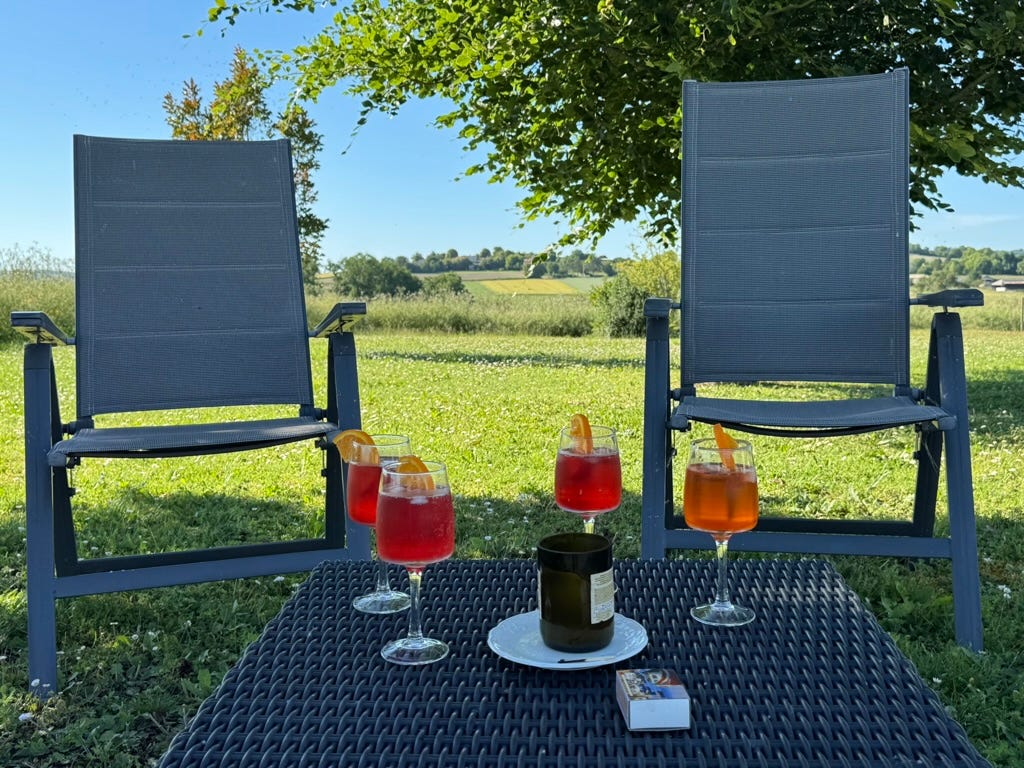
I am sitting, as I write this, looking out at those green hills. It looks pretty good from here. They are growing, exploring, blossoming. Individually and together. The relationship is along for the ride — because they made sure it was.
Which brings me to the question underneath all of this.
What the long-married women at my dinner had stopped doing — and what A. and her man have not — is asking the design questions. Not the logistical questions. The ones that require you to say: who are we now? What do we want the next 20 years to look like? Is the life we’ve built still the one we want to be building?
That conversation is available to anyone. It is harder in a long marriage, where so much is assumed, baked in, rooted. It requires someone to go first — to say, gently and without accusation: I’ve been thinking about what I want the next twenty years to look like. Can we talk about it? It takes two to talk. To be willing to exchange, be curious, believe in the other - and one’s own ability to change.
It is one of the most important conversations Q3 offers. One that opens (or closes) most of the others.
Define ‘Couple’ Your Way
At the end of my few days in Charente, I met up with my daughter for a weekend at Les Sources de Caudalie, a gorgeous vineyard spa near Bordeaux, to celebrate her 30th birthday – in the style she most appreciates. And there, across the terrace, were the most alive people in the place.
Two French women, almost 80, friends for 40 years. One had recently lost her husband. She’d generously invited the other — less well off, also widowed — to spend a few days there. They talked and laughed (a lot) and hiked and drank vieille prune with us at the end of long, lazy evenings. One of them had helped found the Aquarium in La Rochelle. They had powerful opinions. Brimmed over with stories. And serious posture and pearls. Zero interest in appearing demure.
At one point they turned to my daughter — celebrating her big birthday at the next table — and told her to keep fighting for the sea. For the world. To not give up. To remember that the long game was worth playing.
They were, without question, one of the most attractive couples in the place. More animated, more ferociously present, more lit up than most of the more conventional pairings around them. I have been thinking about them ever since.
Research from MIT’s AgeLab confirms what that terrace made visible. Women are more likely to have built the social architecture that makes a Q3 like theirs possible — the friendships, the networks, the daily habits of connection. Men, on average, arrive at this life stage with a thinner social portfolio, and often without having noticed the deficit until it’s acute. Tuesday’s Longevity Briefing will go deeper into the gender differences in how men and women approach Q3 — the divergent expectations, the different relationships to work, money and freedom. But the image stays with me: two women, pearls and vieille prune, brimming over. Having, by any measure, the best time in the room.
And then there is the couple I didn't think to name until now. The one sitting across from me at that birthday dinner. My daughter and I have built something over the years that I can only call a conscious partnership — different generations, different battles, the same stubborn love of dogs and each other. She is one of the people I have chosen, and keep choosing, for this phase. She gave me the joy of choosing me, by returning to London to settle after a decade of wandering the world.
The inter-generational couple is one of Q3's quiet gifts — the relationship where you can see your legacy in living colour. And sound. Where the investment of decades shows up as a person you genuinely want to have dinner with. Who tells you things you need to hear. Who you are still, improbably, teaching — and who is, less improbably, teaching you.
The Q3 couple isn’t necessarily a romantic partner. It’s whoever is alongside you in the becoming — chosen, consciously, for this phase. A partner who has re-chosen you. A friend who has been with you long enough to be able to witness you’re becoming (and not begrudge - or judge - you). A collaborator in the project of a well-lived 3rd quarter. A new friend who meets you at this fork in the road.
What it cannot be — or cannot stay, without attention — is simply the same person who was there before.
If your couple is not along for the ride, it will drag you down.
Choose it. (re)Design it. Choose it again. And again.
Who is your Q3 couple? Have you told them?
Next week: the Q3 body and brain. What the science really shows — and why it should change how you think about what’s possible from here.
Toward the end of my 18-year starter marriage, my then-husband and I sat down and asked each other what the other wanted. What I wanted: for him to be happy and accept me the way I am. What he wanted: for us not to run out of toilet paper. Second marriage of 27 years was a marriage in which I felt cherished, my dreams and ambitions supported, encouragement to grow and be all I could be while he did the same. As Ann mentioned, the first year was the toughest: there were times when I gave the neighbors credit for not calling the police we would fight so much. Since I grew up in Italy, my style of fighting was loud! But with time and understanding, it became clear that this was our not-so-calm way of trying to maintain our hard-won independence when the "urge to merge" was so strong, and at some point we realized that we were both on the same "team" and could maintain our individuality while being together. Then there was magic.
Wonderful piece Avivah. Tell me: how can I access your TED talk?
Aristotle is quoted as saying, “Knowing yourself is the beginning of all wisdom.” But to know yourself, you need a reflection. And those couples who master their mutual ability to support, nurture, and communicate with their spouse in ways that foster self-reflection are the ones who succeed. If I grow with my partner, I stay with that partner.