

Longevity doesn’t just stretch time — it multiplies identities.
Why settle for one, anyway?

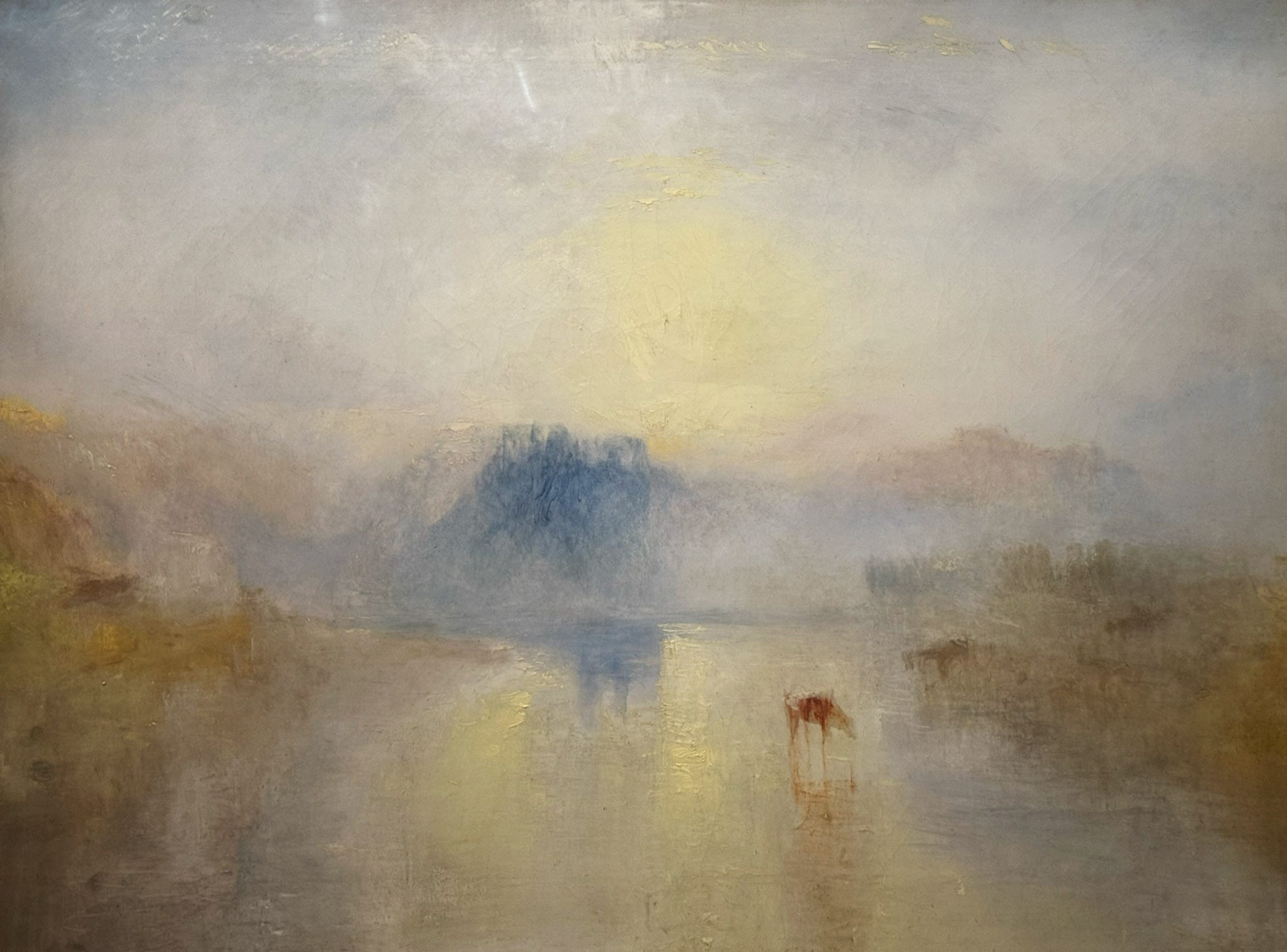
I went to see the Turner & Constable: Rivals and Originals exhibition this week at Tate Britain with the man. It’s part of my attempt to work less and dedicate one weekday to exploring London’s endless pleasures. Admiring two lifetimes’ of prodigious work, I found myself thinking less about the endless landscapes and more about limited time.
Two men painting the same English sky. Two rivals, born a year apart, endlessly compared in their lifetimes. John Constable attentive, pastoral, rooted in English hedgerows and fields. JMW Turner volatile, experimental, obsessed with light, travel and atmosphere. Started his career as a painter very early, at 14, and never stopped.
They lived much of their lives in contrasting parallels, but did not die at the same time. Constable died at 60. Turner lived into his mid-70s. That extra decade and a half mattered. It gave Turner something Constable never had: time not simply to produce more paintings, but to become someone else.
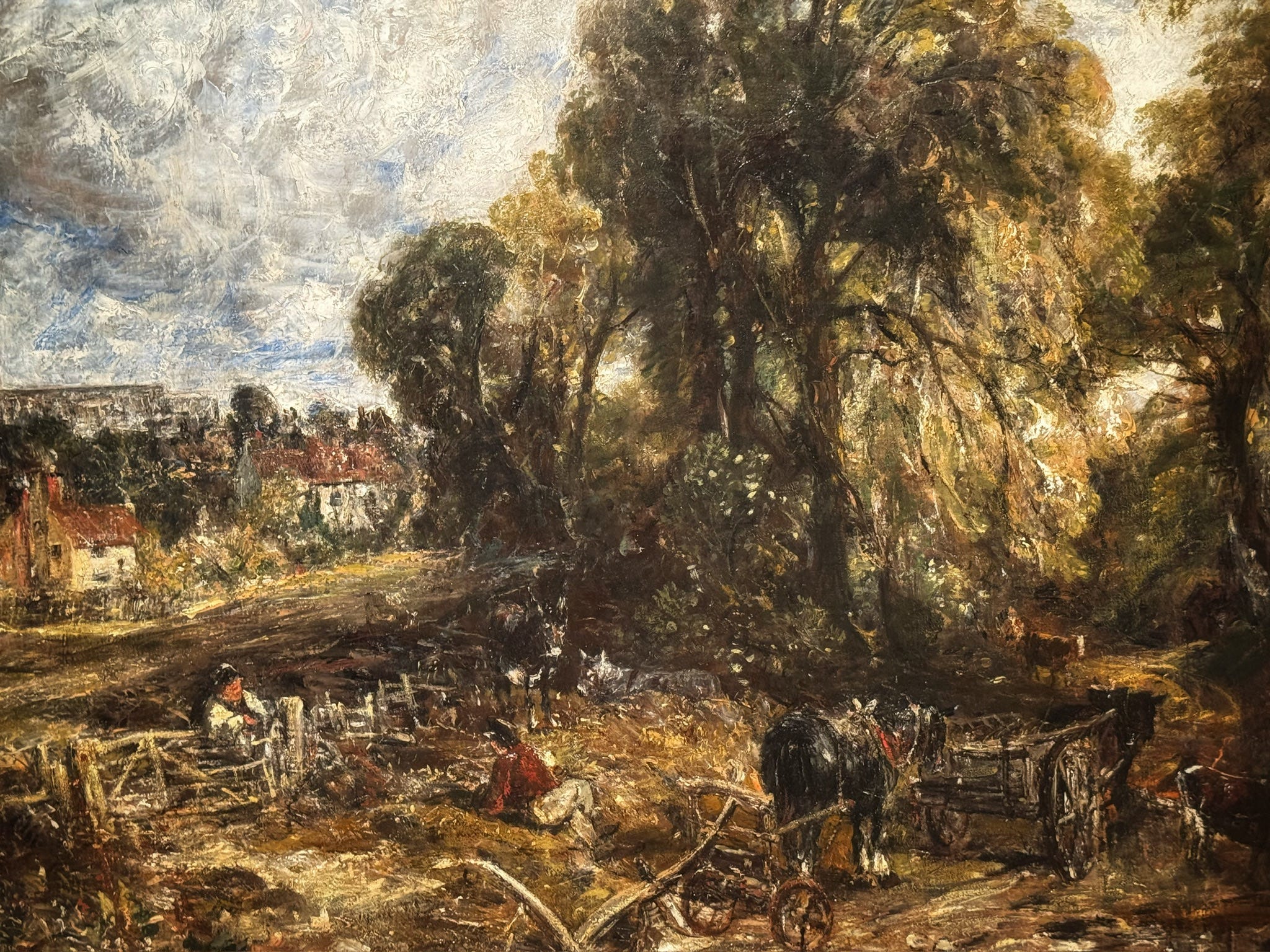
Constable’s late work remains recognisably Constable. There is development, certainly, but continuity dominates. Turner, by contrast, seems to use his final decade to outdistance his earlier self entirely. The later canvases dissolve into light. Ships blur into storms. Form softens. Looking at those works, it is hard to believe they were painted by the same man who once competed directly with Constable.
Longevity didn’t just extend Turner’s career. It multiplied his artistic identities.

Longevity Multiplies Identities
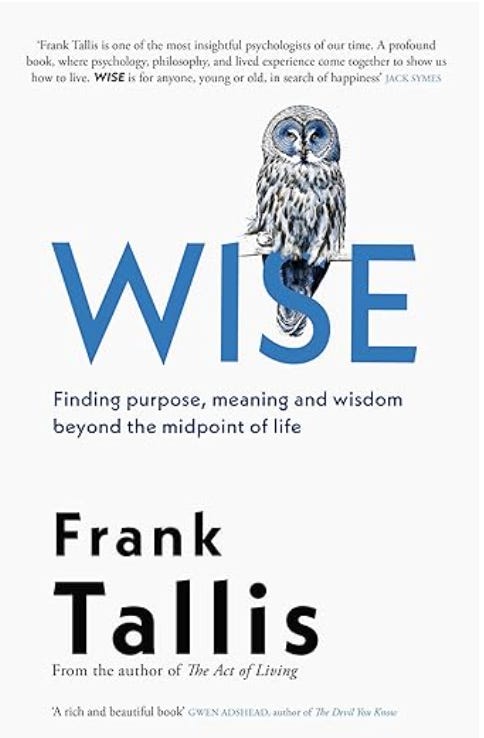
I just finished Wise by psychologist Frank Tallis, who defines wisdom not as moral superiority but as psychological capacity. (It’s also got one of my favourite covers of the year). Wisdom, he suggests, is the ability to tolerate ambiguity, to hold competing truths without rushing to resolve them.
Standing between Turner and Constable, that argument felt visual. Continuity and dissolution. Structure and flux. Identity and reinvention.
Longevity doesn’t just stretch time; it allows us to grow and explore multiple careers, relationships, mistakes and identities. And multiplication can complicate coherence. When lives extend, the self becomes layered. We are no longer a single narrative arc. We are a series of iterations that can continue evolving and growing - until we stop.
In Wise, Frank Tallis suggests that the central developmental task of a lifetime is not achievement, status or even happiness, but integration. By integration he means the gradual weaving together of the competing drives, contradictions, and vulnerabilities within us into something coherent. Wisdom, in his view, emerges when we stop trying to eliminate inner conflict and instead learn to hold it — when reason and emotion, strength and fragility, ambition and acceptance can coexist without one needing to dominate. A wise life isn’t tidy, it’s integrated. It accepts ambiguity, recognises limits, tolerates uncertainty and remains open to revision.
That’s as nice a definition of wisdom as any I’ve heard. He doesn’t suggest it’s a neat linear staircase, but structures the journey around recurring psychological capacities that tend to deepen across a lifetime. Here are a few chapter headings that give you a flavour:
Denial: The Quest for Immortality
Acceptance: Embracing Reality
Turning Points: Revelations, Awakenings and Callings
Soul Searching: The Psychology of Spirituality
Integration: The Essential Task
Taken together, these capacities form less a ladder and more a widening circle. Over time, the task is not to become simpler, but to become more spacious — able to contain more contradiction without fragmentation. That, perhaps, is where Turner’s melting into golden sunsets and luminous suggestions of unity become so powerful: longevity does not merely add years; it offers more opportunities for integration.

Designing Whole Lives, Not Single Careers
This week I also wrote about my young friend and fellow-substacker Charlie Rogers who just published his (first) book Undefinable life design, a Gen Z case for iterative life design. Rogers argues that identity shouldn’t be fixed early and defended forever. Careers, he suggests, are prototypes rather than ladders. Life should be designed, tested, revised. And roles should be multiplied. Life is more stable on multiple pillars.
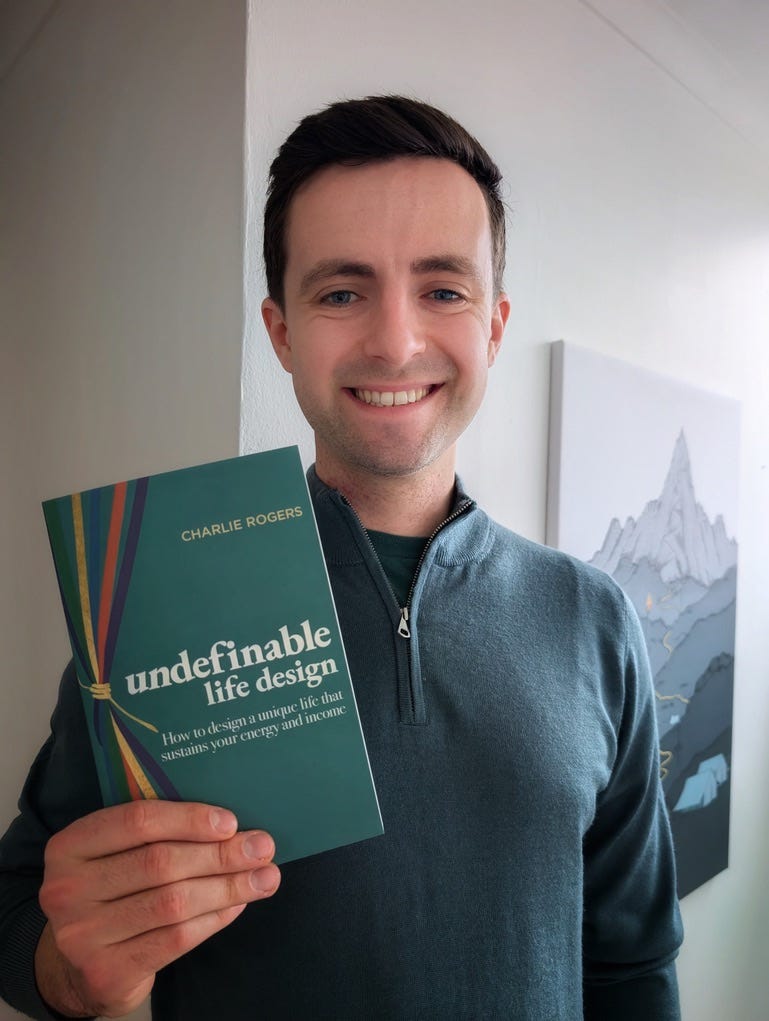
At age 27, Charlie’s articulating something that longevity now makes inevitable. And that many Q3ers would do well to embrace. We are no longer just trying to find ‘the right’ career or mate; we are designing whole, multi-dimensional longer lives that require a different mindset and muscles.
For Q2ers today, when decades stretch ahead, career becomes one chapter among many. Marriage evolves through phases. Relevance expands and contracts. Bodies change. Energy recalibrates. Desire migrates. Everything becomes weather.
Constable painted rootedness. Turner painted weather. Wisdom may be the capacity to live between those canvases, allowing something to remain stable while something else dissolves. And finding, through it all, what Charlie calls your ‘golden thread.’

Q3: Integration vs. Acceleration
That’s the secret of Q3 that emerges through all these themes - it is less about conquest and competition (very Q2) and more about self-awareness and integration. In life’s second half, we are no longer constructing identity from scratch; we are weaving together the selves we have been. And still becoming.
There is something quietly sobering about seeing two men once treated as rivals and knowing that one simply had more years. More years to experiment. More years to stop caring about critics. Longevity is not neutral. It’s also incredibly unequal. It creates possibility.
As I edge toward 65 this summer, I feel these questions myself.
Grandparenting has arrived, not as a sentimental afterthought but as a vivid new role that demands a different quality of presence. Motherhood is morphing too; parenting adult children in their 30s requires restraint rather than direction, listening rather than managing. I find myself recalibrating at work as well, telling myself I am slowing down, becoming more selective, integrating rather than expanding. (I am not entirely sure whether anyone has noticed). The impulse to explore still hums in my nervous system. But so does the desire to digest it all. I feel my identities layering rather than replacing each other. And something still ‘next’ emerging. I’m curious to see who she is.
(On this theme, I recommend reading Karen Salmonsohn’s perfect piece about meeting her 90-year-old future self).

Wisdom in a 100-Year Life
In his last decade, Turner’s paintings feel almost modern, as if he leapt ahead of his era. He didn’t abandon structure, but absorbed it and then allowed it to dissolve. That may be the privilege of longevity. More time, more selves.
Tallis reminds us that wisdom is living with ambiguity. Rogers reminds us that identity can be multiple and ‘undefinable.’ Turner shows us that extra years can produce entirely new art, while Constable reminds us that continuity also has dignity.
The real gift of longevity may not be extension but expansion. It gives us room to integrate rather than discard, to layer rather than overwrite. We are no longer a single story stretched thin across decades. We’re an evolving composition.
If we are given extra years, the task isn’t to cling to a single version of ourselves - nor to dissolve into shapelessness. It is to hold both field and weather, structure and light, continuity and reinvention. In a long life, we are freed from one identity, can inhabit many, and try to digest and make sense of the whole painting.
Perhaps wisdom, in this era of 100-year lives, is simply the courage and spaciousness to let those multiple selves coexist. Allowing the next one to emerge and to always being ready to greet her at the door, and welcome her in with a smile.
Who are you becoming, next?

One metaphor I’ve come to love about the Elder path is this:
Life is a layered cake.
Not a sheet cake. Not a cupcake you inhale at a child’s birthday party. A layered cake.
Each decade is another layer. At twenty, you’re mostly batter — energetic, unformed, slightly chaotic. At forty, you’ve added structure. At sixty, flavor deepens. At seventy and beyond, something unexpected happens.
The cake gets richer.
Not heavier — richer.
The sweetness is more complex. The texture more interesting. There’s depth you simply cannot manufacture early. You can’t rush layers. You can’t microwave wisdom. You can’t Amazon Prime maturity.
And here’s the part culture gets wrong: it treats aging like the cake is drying out.
It’s not drying out.
It’s curing.
The flavors are integrating.
Growing old and wise — truly wise — is a “yum.”
Wow, Avivah - I think this is the best piece of yours ever. You are definitely demonstrating what you’re talking about here: integrating your various selves and expertises and experiences as you write about doing just that!
I’m finding the same thing: right now I’m in the process of reviewing the Spanish translation of my latest book, The New Old, and therefore seeing it with new eyes. And I realize how much of it is an integration/re-application of skills and principles I’ve been thinking and writing about for 35 years to the creation of a great second half of life.
I completely agree that perhaps our most important effort in later life is be open-hearted and open-minded, curious and fearless in integrating all that we are - and all that we could become - into these fascinating older selves.
Please keep exploring and writing!