

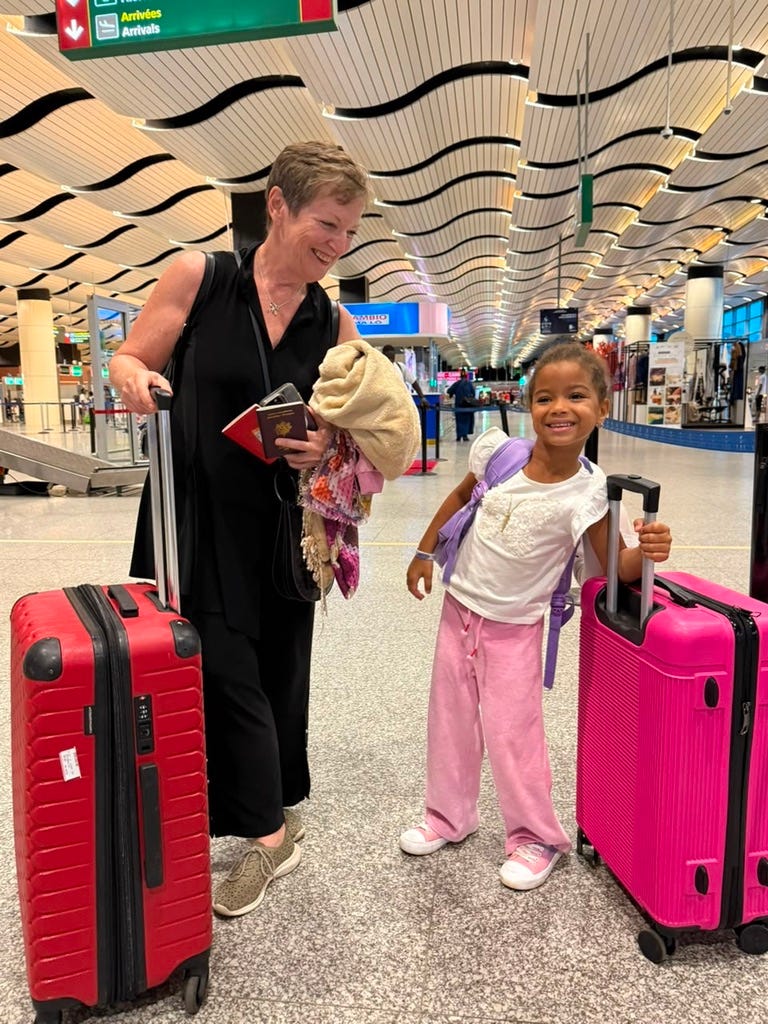
I went to Dakar for a week. I came home with a four-and-three-quarter-year-old. It wasn’t planned.
Faraway, still
Years ago I wrote about being a Faraway grandmother — the kind who flies in trying to imprint a connection through a visit, a gift, a scattering of photos, while the Close-bys do bath time and Tuesday pickups (Grandmothering Across Continents). Zo was sixteen months old then. I remember the look on her face, somewhere between curiosity and suspicion, as if she were wondering who this strange woman was that her father kept hugging.
Being Faraway, I wrote at the time, is like a slip-on, slip-off coat. No belt, no buttons. Easy to take off the moment the visit ends.
That was true. It just turned out to be an early draft of the truth, not the whole of it.

The jaunt that grew a passenger
Last week I wrote about changing your mind as a maturity skill — how my summer plans of Staying Put met a granddaughter learning to swim and another learning to talk and lost (last week’s piece, here). I didn’t know, when I wrote it, how far the losing would go.
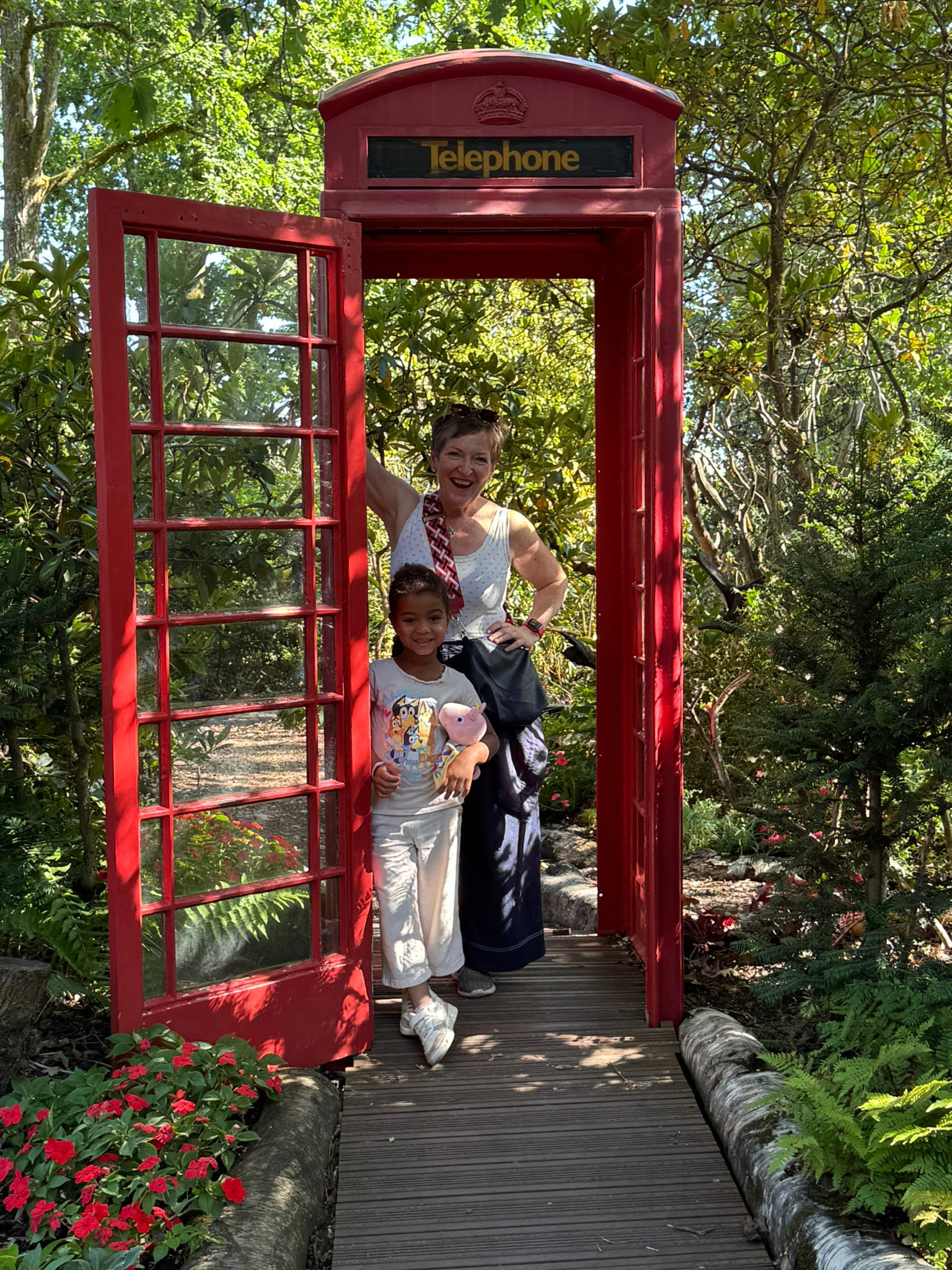
I’d gone out to Senegal on a sudden jaunt. A week of small hands and swimming lessons and the particular chaos of a house full of two little granddaughters, several nounous, and knackered parents juggling work and long summer holidays. I wasn’t planning to bring anyone home. Then Zo, who turns five in October, decided she wanted to see our new house. I wanted her to come. And her mother — my daughter-in-law — said yes.
That’s the whole story, and also not nearly all of it.
The gift that wasn’t mine to give
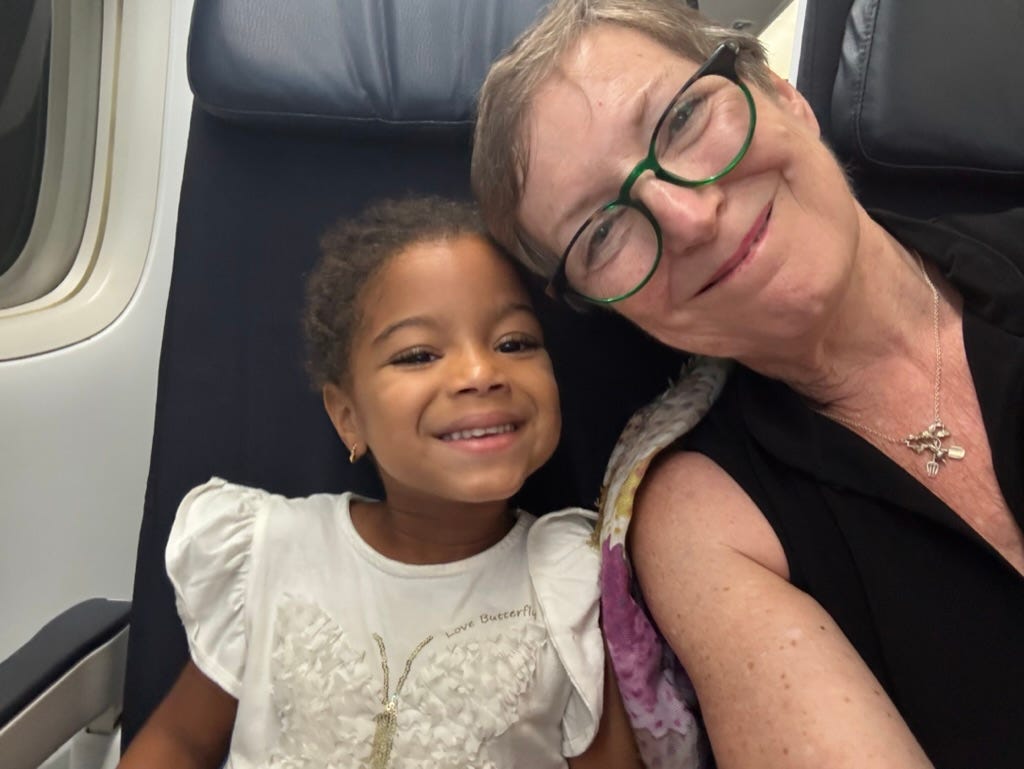
A five-year-old doesn’t get on a plane with her grandmother because a grandmother wants it. She gets on a plane because her parents decide, in the space of a few days, that the risk is acceptable, the rest is needed, and the reward is real. That decision belonged (almost) entirely to my daughter-in-law. It’s almost always mom who decides. She didn’t have to make it. She made it anyway.
I’ve had a few good years in my career. Titles, mandates, the odd promotion I was proud of. None of them meant what this did.
Trust ain’t a small thing to hand over. It’s the thing you can’t ask for outright, can’t negotiate, can’t earn through good behaviour alone. It has to be given. My daughter-in-law gifted it to me — freely, without making me feel I owed her anything for it — and I’ve been turning that over ever since, trying to find the right name for it.
I haven’t found one yet. It might just be the biggest promotion I’ve had in years. From Faraway Glam’Ma to Trusted Custodian.
What too many friends don’t get
I appreciate it so much in part because I know how rare it can be. I hear another version of it often.
Friends of mine — capable, loving, entirely trustworthy grandparents — don’t get this. Their adult children keep the gate closed. No overnight stays. No solo trips. No respite from the helicopter parenting, no matter how much good it would do to all concerned. Sometimes barely a Sunday lunch without both parents overseeing what gets eaten. It’s never explained, and rarely negotiable. It just sits there, a door that doesn’t open, and everyone pretends not to notice how much it costs. (See 4-Quarter Lives podcast with Dr Terri Apter about The Complexities of Modern Grandparenting).
I don’t think most of those adult kids are being intentionally cruel. I think something else is going on — a caution that’s become the norm, a nervousness about handing over control that earlier generations didn’t feel the need for. But I’ve watched what it does to my friends - and the kids. It’s a specific kind of grief, grieving a relationship that technically still exists.
My mother’s door
My mother had a version of this too, and it was one of the great regrets of her life. My brother lived two hours from her — close enough that a stayover with his much-beloved eldest should have been the easiest thing in the world to arrange. He wouldn’t leave his son with my mother. Not once, not for a night.
I don’t know why. My mother never knew either. What I know is that she wanted it badly, asked for it more than once, and was told no. It joined a long list of things that were, in one way or another, taken from her.
I think about that door as Zo sleeps contentedly upstairs, after another day rich in love and new experiences.
What the men aren’t writing
I read a lot of men reflecting on later life. Retirement, identity, the loss of a title, the ache of no longer being needed at the centre of things. Some of it is genuinely lovely. Almost none of it mentions grandchildren.
One of my favourite older writers, the Old Grey Thinker, finally and coincidentally mentioned his grandchild this week — a funny aside about being dismissed as a technological dinosaur, his grandson blissfully unaware that he begins every morning in quiet conversation with AI. I laughed. Then I found myself wondering why that morning ritual stayed a private joke rather than something shared. Why the grandchild got a punchline and not a paragraph.
It’s the greatest joy I know at this stage of life, and somehow it barely makes the page. What’s that all about?
You’ve read, I’m sure, about the grandmother effect. Humans are one of the only species — alongside a few whales — where females live decades past their fertile years. The leading theory is that grandmothering is why: women who redirected energy into grandchildren helped those grandchildren survive. Evolution, it turns out, may have selected for exactly the kind of joy men keep leaving out of their memoirs.
The other gift of this week is watching my own late love, the childless bachelor I married when he was 56, blossom into totally doting grandfatherhood. Watching him teach Zo how to put her clothes on a hanger was worth almost any amount of flying hours…
The real longevity dividend
Here’s what nobody quite says about longer, healthier lives: the gift isn’t only more years. It’s that we might have enough of them, and enough energy inside them, to accompany our grandchildren properly — not as a distant blessing offered at the end of a life, but as an active presence across the length of theirs.
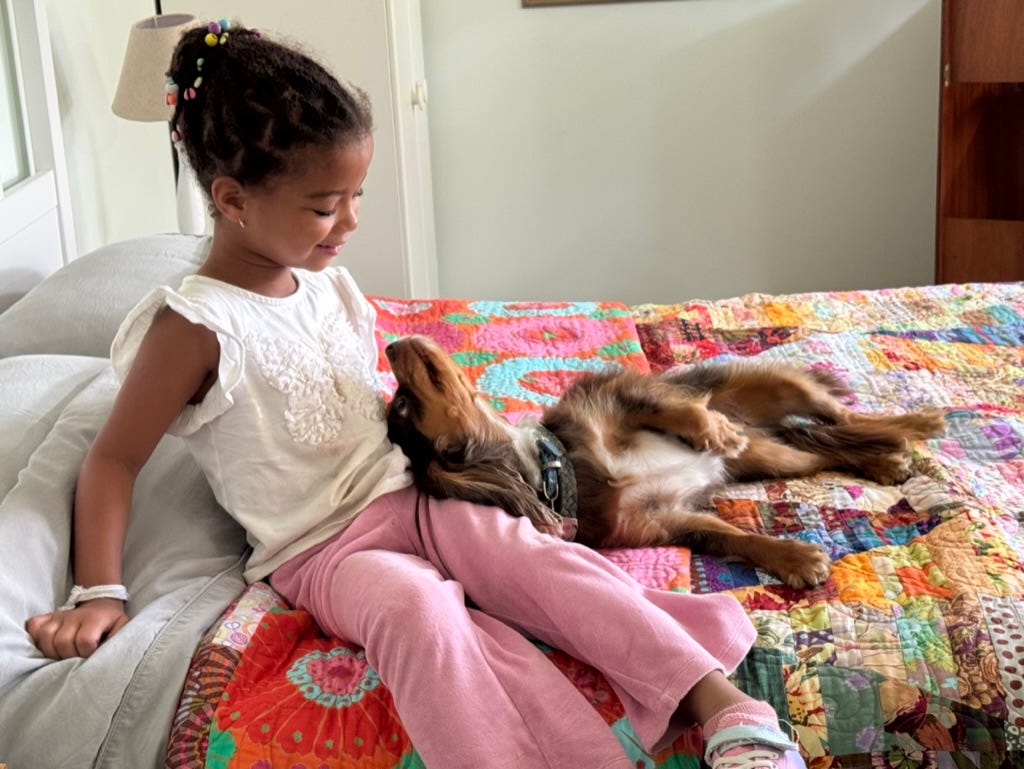
If we’re lucky, we get to do this walking, not sitting. An hour on the woods trail with the dog, learning to trust each other. An afternoon queuing for flying teacup rides at Peppa Pig World. The kind of stamina that used to belong only to parents now belongs, for a good long stretch, to us too — long enough, maybe, to walk them out of childhood and some way into whoever they become next.
That’s the dividend. Not a pension. A hiking companion who happens to be six decades (exactly in my case) ahead of them on the trail, and still going strong.
The Gift I Got
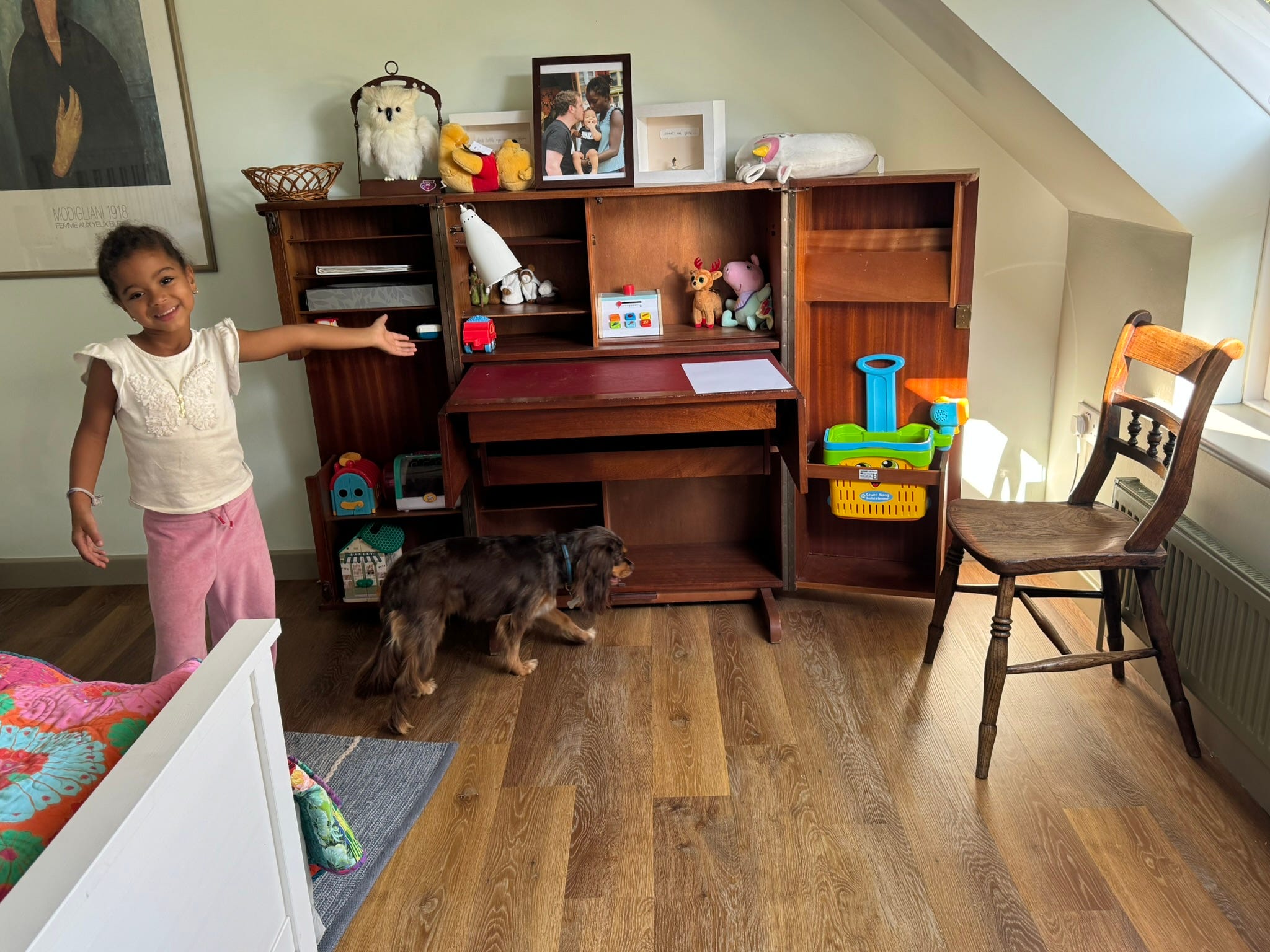
I got a week that started as a jaunt and ended with a small person transforming the desk in the guest room into a vast menagerie of toys she chose at the local charity shop.
Every night before bed, two books, read until I could recite them, pulled from an earlier memory bank: Billy Brown Makes Something Grand, and The Little Engine That Could. The first was one of my favourites as a kid. The second was her father’s fave. Funnily, she picked them out and claimed both as her own. Nightly.
The first is an ode to creativity and the kind of adulthood that gives it room to blossom. The second, the best treatise I know on confidence. And the repetitive, choo-choo of a rhyming message that whether you believe you can do a thing - or not - you’re right.
I earned a degree of this trust through my own version of repetition. I showed up, regularly. Trips to Dakar, trips elsewhere to meet up, little tendrils of relationship building from early on. But then, so did my mom. I got the thing my mother spent years wanting. She didn’t get my nephews, but I did send her my kids. Unaccompanied minor travel starts at age 5. My kids were regular users. I hope my granddaughters will be too.
Trusting your parents (and in-laws!) isn’t everyone’s lot in life. I know how lucky this early visit makes me. I also know luck isn’t quite the right word — it makes it sound accidental, when what actually happened was one woman deciding, on purpose, to hand something immeasurably precious to another.
I’m retroactively grateful I gave that gift to both my mother and my mother-in-law. They both amply deserved it. So did my kids. I never knew my own grandparents, they were lost to war and history. So there are deep, healing echoes in the little hand that holds mine as we walk through the forest behind Oakdene, admiring how the baby ferns unfurl in the most astonishing way.
Q3’s greatest joy
Erik Erikson called it generativity — establishing and guiding the next generation. He placed it at the centre of what makes this stage of life meaningful, the alternative to a kind of stagnation that curls inward and stops reaching outward at all.
He wasn’t writing about grandparents specifically. But he could have been. Generativity isn’t parenting again — no discipline to enforce, no bedtime to fight for, or foods to impose. It’s something quieter and, if I’m honest, easier: books read twice, trails walked slowly, time and trust liberally gifted and received with a wide open heart.
Q3’s greatest joy might be exactly this — discovering that the most generative years of your life don’t come first. They come now.
So here’s what I’m asking this week, because I suspect I’m not the only one carrying a version of this story.
What’s the door in your family that opened — or the one that didn’t? And if it opened, who opened it for you?
Yes, yes, yes. I never knew my grandparents very well and my children had very limited grandparent time (husband's had died early, mine were in the US), so it came as a complete surprise to discover (20 years ago now) that being a grandmother was wonderful in so many ways. I became so interested that I decided to write a book, based on in-depth interviews with 25-30 grandmothers of all ages etc, called Celebrating Grandmothers. Once I had the idea of writing it, I got worried that it would be boring because everyone would be expressing what you and I feel, but I hadn't banked on terrible family problems. The book is full of happy stories, but also unhappy ones where grandparents weren't allowed to see their grandchildren or intra-family dynamics were terrible.
As for me, I got heavily involved with grandson number 2 when his mother (my DiL) got Stage 3 cancer when he was under a year (she recovered and is fine now). Suddenly we were needed a LOT. As a result, of course, we became particularly close to this grandson, now 16, and he comes over most weekends to spend the night with us. Yes, it has enriched our lives beyond measure. If you want an example, see https://arichardson.substack.com/p/a-notre-dame-moment.
Avivah, your best ever post! How lucky my husband (known as “The Ba”) and I (“Granny”) have been to take five grandchildren on adventure trips with us (three trips; took two each time, and once with one). Hadn’t really thought about it but I guess the door was open when we asked; they were age 9+ (we were 70-ish).