
Careers Beyond Ladders
Building organisations for reinvention instead of retirement

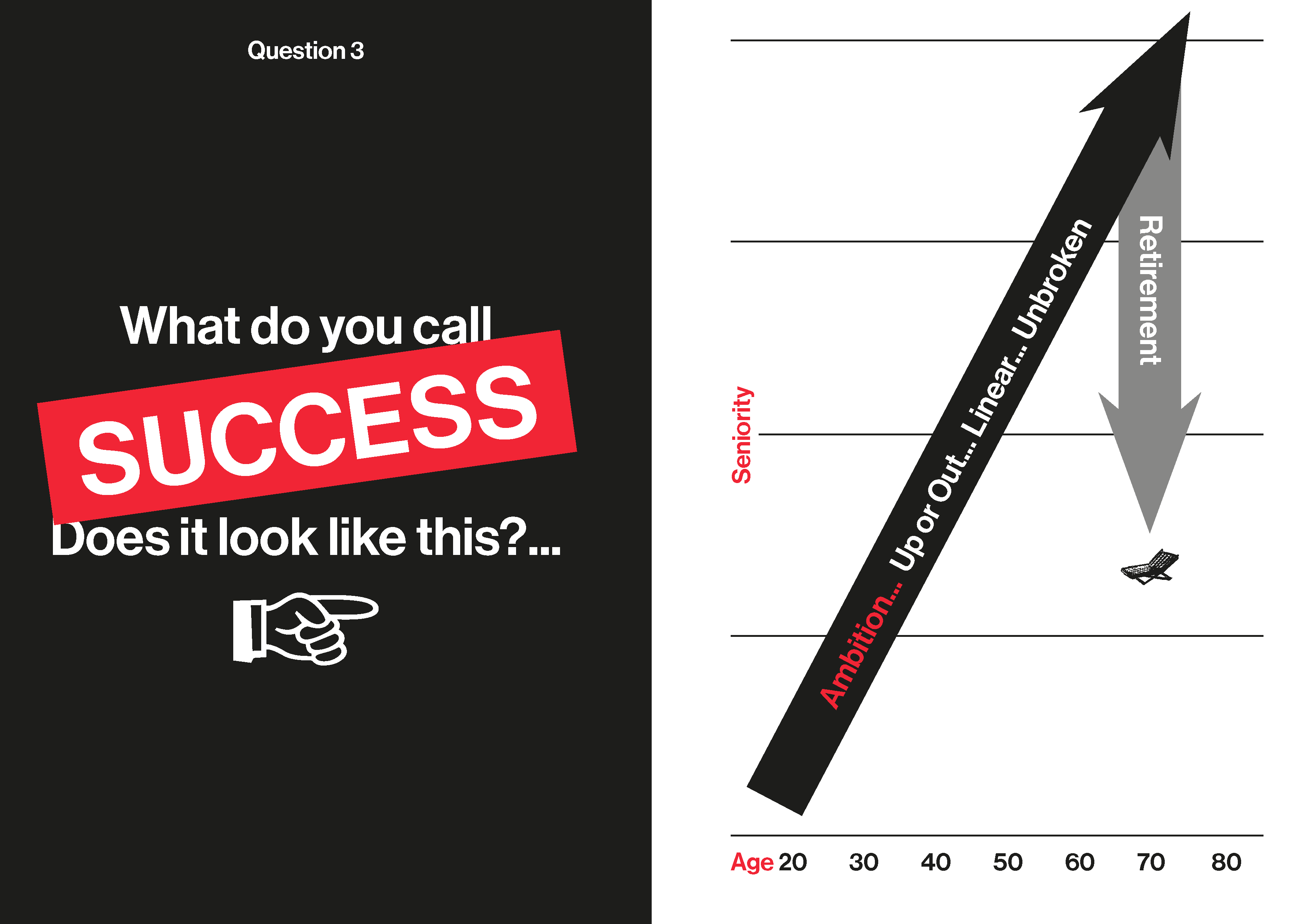
Somewhere in your HR system is a career ladder. Entry, mid, senior, exit. It was designed for a workforce that worked for thirty years and stopped. Your workforce doesn’t do that anymore.
The problem isn’t that people are working longer. That’s easy to plan for. The problem is that the ladder was never built to hold a career that changes shape three or four times — that flexes, pauses, restarts, and runs sideways as often as it runs up. Most organisations are still bolting “longer careers” onto a structure engineered for a shorter one. It doesn’t work.

The ladder assumes a straight line
Up-or-out logic works when the workforce is homogenous in ambition and similar in life stage. It stops working the moment a meaningful share of your people are past the climbing phase and into Q3’s ‘something else’ — consolidating, mentoring, working differently, working less, or working more but on their own terms.
That share is no longer small enough to ignore or write off. Workers over 55 are approaching a quarter of the labour force across G7 economies by the early 2030s. In Japan, it’s closer to 40%. A workforce that shape cannot be managed by a structure with only one direction of travel.
Ken Dychtwald made the broader version of this point in Fortune this spring: our systems, from Medicare to career design, were built for what he calls a “short-life world,” and haven’t caught up to the fact that people are now living decades past the point those systems assumed was the end. His diagnosis for work specifically is blunt — organisations still nudge experienced people toward the sidelines instead of treating five-generation workforces as a live source of talent, mentorship and innovation. Career architecture is where that catch-up has to happen first, because it’s the structure everything else — pay, progression, purpose — sits on top of.
Three organisations, in three very different systems, have each built a different piece of a possible response.
